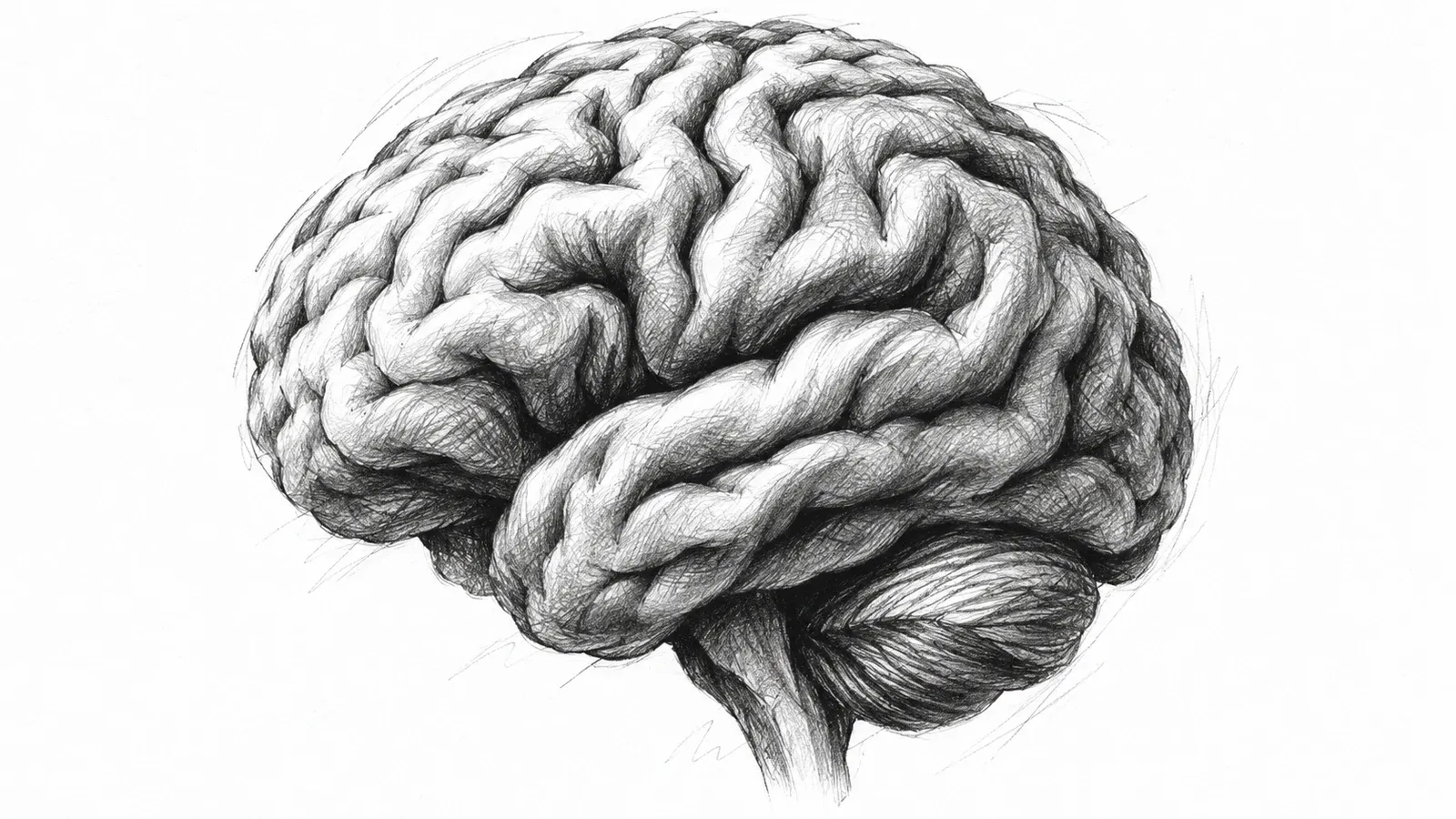
You pick up your phone without deciding to. You replay a conversation while trying to read. A small frustration gets a reply you wish you had paused before sending.
When a response feels familiar, it can seem permanent. The idea of neuroplasticity offers a reason to be curious about learning something different. But what does it actually mean, and where does meditation fit?
Neuroplasticity is the nervous system’s capacity to change with experience and learning. Meditation offers repeated practice in noticing where your attention has gone and bringing it back. Research suggests some meditation programmes can affect brain function, but it does not establish a guaranteed way to “rewire” your brain or a deadline for doing so.
What is neuroplasticity?
Neuroplasticity describes the brain’s ability to adapt its structure, function, or connections. It is part of learning, rather than a special state you need to unlock. The Society for Neuroscience’s BrainFacts guide explains that this capacity continues throughout life.
Consider learning a piece of music. At first you may need to think through each movement. With practice, parts of the task become more familiar. The ability to learn and adapt involves changes in the nervous system, although you cannot tell exactly what changed in your own brain simply because the task feels easier.
Researchers distinguish several kinds of change:
- Structural changes concern physical features of the brain, such as measurements of tissue or the organisation of connections.
- Functional changes concern how the brain works, including patterns of activity and coordination between regions.
- Changes in performance or experience concern what someone does or reports, such as completing an attention task or feeling less stressed. These outcomes need their own measurement; they are not interchangeable with a brain scan.
These distinctions matter when you read a headline about meditation changing the brain. A finding in one category doesn’t automatically establish a result in the others.
How meditation gives you something to practise
In a simple attention-based meditation, you choose a point of attention: perhaps natural breathing, a sound, or the feeling of your feet on the floor.
Sooner or later, attention moves elsewhere. You notice that you’re planning dinner or following a memory. Then you return to the sensation you chose.
That sequence gives the practice a clear shape:
- Choose an anchor. Decide what you’ll attend to.
- Notice wandering. Recognise when attention has moved.
- Return gently. Bring it back without arguing with the thought.
- Repeat when needed. Use the same instruction the next time you notice.
You can understand this as practising an attentional skill. It doesn’t require you to claim that every return creates a new connection, grows a brain region, or produces a particular biological result. Those are separate scientific questions.
If the basic method is unfamiliar, start with our five-minute meditation for beginners. You can learn the exercise before worrying about what a scan might show.
What does research say about meditation and the brain?
There is evidence worth exploring, alongside substantial uncertainty. The National Center for Complementary and Integrative Health notes that some studies suggest effects on brain function or structure, but interpreting the findings and their practical significance remains difficult.
Two examples show why a single promise about “rewiring” is too simple.
A small trial reported changes in functional connectivity
In a 2016 randomised controlled trial led by J. David Creswell, 35 stressed, unemployed adults took part in either an intensive three-day residential mindfulness programme or a relaxation programme. The mindfulness group showed increased resting-state functional connectivity between particular brain regions compared with the relaxation group.
Functional connectivity refers to statistical relationships between brain-activity signals. It does not directly show the growth of new nerve connections. This was also a small study of a specific group in an intensive setting. Its findings cannot be used to promise the same result from a few minutes with an app.
A larger study did not find the predicted structural changes
A 2022 study combining two randomised controlled trials examined structural brain scans from 218 meditation beginners. It compared eight weeks of mindfulness-based stress reduction with an active comparison programme and a waiting-list group.
The researchers found no evidence of the expected group differences in brain-structure changes. That finding challenges broad claims that an eight-week course reliably changes the physical structure of the brain. It does not establish that meditation has no effects on behaviour, experience, or brain function; those are different questions.
Taken together, these studies support a measured view: meditation is a form of mental practice that researchers are studying, rather than a proven shortcut to a particular brain transformation. Research on a structured programme also does not establish clinical benefits for Quiet Noise itself.
How to read a claim about “rewiring your brain”
Before treating a headline as a personal promise, ask what the study actually tested.
Who took part? Experienced meditators, beginners, and people with a particular health condition are different groups. A difference between long-term meditators and non-meditators may reflect more than meditation alone.
What was the comparison? Comparing a programme with no activity asks a different question from comparing it with another credible programme offering similar time and attention.
What changed? A brain-imaging measurement, a questionnaire score, and an everyday skill are different outcomes. A change in an image doesn’t tell you everything about how a person feels or functions.
What was the practice? A residential retreat or a supported eight-week course is different from an independent five-minute session. The amount of practice, instruction, and setting all deserve attention.
These questions let you stay interested in the science while choosing a practice for reasons you can assess in your own life.
A practical way to begin: a two-week learning plan
You don’t need to achieve neuroplasticity before you can meditate. A more useful starting goal is to learn the method and see whether it suits you.
The following plan is a practice suggestion, not a research-tested protocol for changing brain structure. Two weeks gives you a period to review your routine; it is not a biological deadline.
Days 1–3: make the exercise familiar
Choose a safe place to sit comfortably. Set a brief timer, perhaps for two to five minutes. Keep your eyes open if you prefer. Notice a natural breath, an ordinary sound, or the support beneath your feet.
When attention wanders, return to the same anchor. Let the session end at the time you chose. Avoid extending it because you think you need to reach a special feeling.
Days 4–7: make the reminder specific
Attach the session to something already in your day: finishing breakfast, closing your laptop, or arriving home. Prepare the seat and timer so beginning involves fewer decisions.
Keep the method familiar. Changing the duration, location, and technique every day can make it harder to work out what fits. If the routine is awkward, adjust one practical detail. Our daily meditation habit guide offers more examples.
Days 8–10: try one pause during an ordinary task
Choose a low-pressure moment to practise outside the session. Before opening another browser tab, notice what you were doing. Before starting a reply, feel your feet on the floor and decide what you want to say.
Treat this as an experiment in using the same instruction in a different setting. You might notice something useful, or find that remembering the pause is difficult. Neither experience measures your brain’s plasticity.
Days 11–14: review what you can observe
Ask whether the reminder was practical, whether the duration was comfortable, and whether the exercise felt manageable. Perhaps you recognised wandering sooner in one session. Perhaps the most useful discovery was that lunchtime fits better than bedtime.
Keep the parts that worked and change one thing that didn’t. You can continue with the same short duration. There is no need to turn the plan into a longer-session challenge.
What progress can you realistically look for?
You cannot measure changes in your brain structure by counting sessions or checking how calm you feel. You can, however, observe your practice more concretely:
- You remembered to begin after the cue you chose.
- You recognised a moment of distraction and returned to your task.
- You noticed frustration before deciding how to respond.
- You found a comfortable way to practise without forcing a posture or breath.
- You returned after a missed day without abandoning the routine.
These are examples to look for, not benefits everyone will experience. Keep your expectations open. A session history is a record of practice, not a neuroplasticity score.
If repeating thoughts dominate your sessions, our meditation for overthinking guide explores ways to work with them. If you prefer an evening practice, see meditation before bed.
Where Quiet Noise can help
Quiet Noise gives the practice some structure: a Focus timer, a daily meditation goal, and a record of your sessions. You can choose a duration before sitting down and let the timer keep track of the time.
Those features support organising a routine. They do not diagnose brain changes, measure neural connections, or guarantee a health outcome. Choose a goal for the day you have, then practise the small action of noticing and returning.
If meditation increases distress, pause. It doesn’t suit everyone, and you don’t need to push through discomfort to make progress. Speak with a qualified health professional if you need personalised support; an app should not replace assessment or recommended care.
Questions about neuroplasticity and meditation
Can adults still develop neuroplasticity?
The brain retains a capacity to adapt throughout life. Neuroplasticity is that capacity, rather than a milestone you either pass or fail. How learning happens depends on the person, experience, task, and context.
How long does meditation take to rewire the brain?
There is no established universal timeline. Studies test different practices and outcomes, and their results vary. A promise such as “rewire your brain in 21 days” is more specific than the evidence presented here supports.
Does meditation grow new brain cells?
The studies discussed here do not establish that meditation grows new brain cells in humans. Neuroplasticity includes many kinds of adaptation and is not synonymous with generating new neurons. Brain-volume or connectivity findings should not be presented as direct proof of new cells.
Which type of meditation is best for neuroplasticity?
There is no established best technique for producing a particular brain change in everyone. For a beginner, a comfortable, understandable method is a practical place to start. Attention to breathing is one option; sounds or contact with the floor are alternatives.
Is a distracted session a wasted session?
Wandering gives you an opportunity to practise noticing and returning. You don’t need to count every thought or demand silence. If the exercise is frustrating, shorten it or try another comfortable anchor; stop if it becomes distressing.
Sources and further reading
- BrainFacts / Society for Neuroscience: Your Magnificent Plastic Brain
- Creswell and colleagues, 2016: Randomised trial of mindfulness training and resting-state functional connectivity
- Kral and colleagues, 2022: Absence of structural brain changes from mindfulness-based stress reduction
- NCCIH: Meditation and mindfulness—effectiveness and safety
Practise the pause. Start with a few minutes.
Choose a Focus session in Quiet Noise, set a daily goal that fits, and keep a record of your practice. Begin with the time you have today.
Download on theApp Store